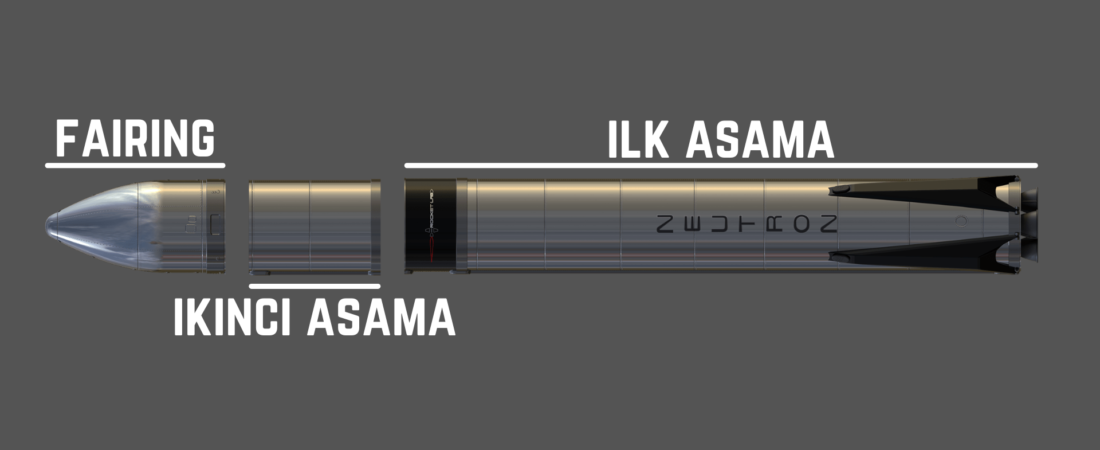
Rocket Lab’s Electron rocket is a proven, profitable (at the gross margin level) small-launch vehicle. But Electron’s 300 kg payload capacity caps the total addressable market. Neutron is RKLB’s bid to enter the medium-lift market — and if successful, it transforms the company’s scale and valuation.
Here’s everything RKLB investors need to understand about Neutron and what it means for the investment thesis.
Neutron Specifications: What Kind of Rocket Is This?
- Payload to LEO: 13,000 kg (~43x Electron’s capacity)
- Payload to Mars/Venus transfer orbit: 1,500 kg
- First stage: Reusable (land-back-to-launch-site design)
- Propulsion: Archimedes engine (LOX/methane — similar to SpaceX Raptor propellant choice)
- Fairing: Integrated with the first stage (unique “hungry hippo” design)
- Launch site: Wallops Island, Virginia (existing RKLB facility)
- First flight target: 2025-2026 (management guidance)
Why Medium-Lift? The Market Opportunity
The small-launch market (Electron’s territory) is growing, but it’s fragmented and limited by payload size. The medium-lift market is where the large constellation deployments happen:
- Amazon Kuiper (3,200+ satellite broadband constellation)
- AST SpaceMobile BlueBird constellation expansion
- SES O3b mPOWER and next-gen satellites
- Government and defense constellations
- Commercial weather and Earth observation constellations
SpaceX’s Falcon 9 currently dominates this market. A single Falcon 9 can launch 20+ Starlink satellites or equivalent commercial payloads. If Neutron reaches cost parity or better performance on dedicated launches, it can compete for this business.
The Reusability Design: Ambitious and Innovative
Neutron’s design philosophy differs from Falcon 9 in key ways:
Integrated Fairing (“Hungry Hippo”)
Unlike Falcon 9 (where the payload fairing separates and is potentially lost), Neutron’s fairing is part of the first stage. It opens, releases the payload, closes, and returns to Earth with the booster. This eliminates fairing recovery challenges and simplifies the reuse process.
Landing Legs vs. Propulsive Landing
Neutron uses four landing legs (similar to Falcon 9) for propulsive vertical landing. Target: land back at the launch site (RTLS) rather than a downrange drone ship for most missions.
LOX/Methane Propellant
Methane offers better Isp (specific impulse) than RP-1 kerosene and doesn’t form deposits in engines — making reuse cleaner. SpaceX chose methane for Raptor/Starship for the same reasons. Rocket Lab’s Archimedes engine development is a key risk factor; it’s a new engine design without flight heritage.
Development Status and Risks
Current Status (as of 2025)
- Archimedes engine has been test-fired at Stennis Space Center
- First stage tooling underway
- Wallops launch pad under construction
- Management target: first launch in 2025-2026
Key Risks
Engine development: New rocket engines are hard. Archimedes is LOX/methane, which is less heritage-rich than RP-1. Development delays here push everything right.
Schedule risk: Neutron has already experienced schedule pushbacks from original 2024 target. Every additional delay increases cash burn during development and gives competitors more time to lock up customers.
First flight risk: New rockets often fail on first flights. This is statistically normal in the industry. A Neutron failure on first flight doesn’t end the program, but it would significantly impact RKLB’s stock price and customer confidence.
Customer lock-in: Until Neutron is operational with demonstrated reliability, major constellation customers (Amazon Kuiper, AST scale-up) will not commit primary launch manifests. The chicken-and-egg problem requires RKLB to demonstrate the vehicle before locking in the revenue that justifies the vehicle.
What Neutron Success Means for RKLB Valuation
The current RKLB market cap (~$8-12B depending on the day) primarily prices in:
- Electron launch business (reliable, growing)
- Space Systems manufacturing (growing fast)
- Option value on Neutron (discounted due to execution uncertainty)
If Neutron reaches operational status with 2-3 successful launches and begins landing commercial contracts:
- The addressable market grows 10x+
- Revenue guidance for 2028-2030 increases dramatically
- Valuation multiples re-rate upward as RKLB becomes a medium-launch competitor
Analysts have pointed to $15-25/share as bull-case targets if Neutron executes. Bear case (significant Neutron delay or failure): $8-12/share support from existing Electron + Space Systems businesses.
How to Track Neutron Progress
Key milestones to watch:
- Archimedes full-duration engine test completion
- First stage structural test article completion
- Wallops pad completion
- First launch (go/no-go)
- First successful flight
- First reuse of first stage
- First commercial customer announced
Each milestone de-risks the program and should incrementally increase RKLB’s valuation. Follow RKLB earnings calls — management provides specific Neutron updates each quarter.
We track RKLB and Neutron development milestones in the Space Watchlist. Read our full RKLB analysis for the complete investment thesis. Subscribe for weekly updates at orbitalinvestor.com/signup.
Continue Reading:
- Rocket Lab (RKLB): The Space Stock That Could 10x
- SpaceX vs Rocket Lab: Which Space Stock Should You Own?
- The Complete RKLB Earnings Playbook
Browse all our analysis at orbitalinvestor.com/blog or see our premium tools at Products.
Get weekly insights like this — free.
Space stocks, AI automation, and trading strategies. Join the Orbital Returns newsletter and stay ahead of the market.
🛰️ NEW FREE TOOL
Track Every Space Stock in One Place
25 space and aerospace tickers — $RKLB, $ASTS, $LUNR, $KTOS, $LMT and more — with live prices and AI-powered weekly summaries.